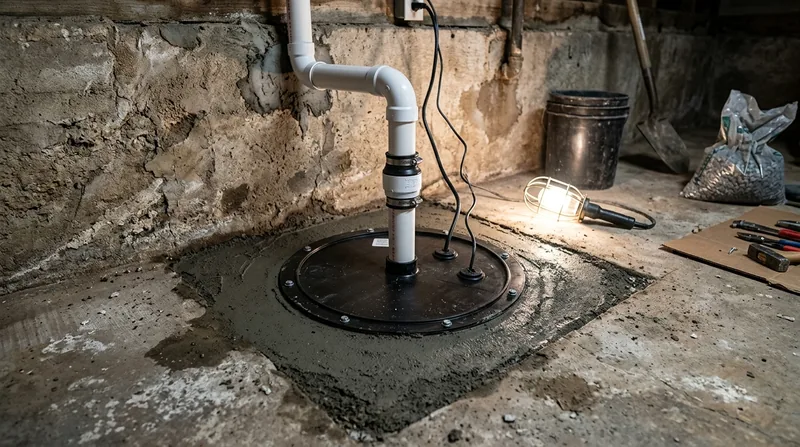


Conway sits on clay-rich Arkansas River terrace soil that swells hard after spring storms and cracks open in the August heat. Most homes here are slab-on-grade or pier-and-beam, so full basements are rare, but the older 1920s to 1950s brick and frame houses near downtown and the college still have lower levels dug against stone and block footings. When Tucker Creek or the Cadron Creek drainages run fast, water pushes against those below-grade walls and slab edges, and a failed sump pump turns a wet floor into a flooded one overnight. Sump Pump Installation & Replacement in Conway is the work we do to put a properly sized pump, a sealed basin, a check valve, and a discharge line that actually carries water away from the foundation. If you are already dealing with seepage, start with a basement waterproofing assessment so the pump is part of a full drainage plan, not a bandage.
Why Sump Pump Work Matters on Conway's Clay and Creek Drainages
Conway's soil is the main driver. That expansive clay holds water against the foundation long after the rain stops, and hydrostatic pressure builds until it finds the weakest point: a cold joint, a block mortar line, or the sump basin itself. In the 1960s to 1980s brick ranches on the east and south sides, the slab edge and brick veneer over block take the hit first. In the newer west and north subdivisions, graded lots help, but a pump that short-cycles or a discharge line that dumps water right back at the wall undoes the grading in one season.
- We size the pump to the actual inflow, not to a box label, because a 1/3 HP unit that works on a Greenbrier lot may be undersized near the Cadron Creek drainage.
- We set the pump on a solid base in a clean basin so grit from clay-heavy storm runoff does not jam the float switch.
- We install a check valve and route the discharge line to a freeze-safe, code-compliant outlet that does not recycle water against the foundation.
- We seal the basin lid to keep soil gas and moisture from rising into the lower level and to stop debris from falling in.
- We test the float, the check valve, and the discharge under load before we call the job done.
A pump is only as good as the drainage path around it, so we always check the interior perimeter drain and footing drain before recommending a replacement.
Key info: On a 1970s brick ranch off East Oak Street in Conway, the original sump basin was a bare concrete pit with no lid and a discharge line that ended two feet from the wall. Spring storms sent that water straight back to the footing. A sealed basin, a 1/2 HP pump, and a discharge line extended to the curb solved the cycling problem in one visit.
Permits for work that alters drainage or the sanitary connection of a sump discharge vary by jurisdiction. Always verify the current requirement with the City of Conway building department before scheduling the work. You can reach the city through cityofconway.org.
How We Install or Replace a Sump Pump in Conway, Step by Step
We start by finding out where the water is actually coming from. On a slab-on-grade home, that means checking the slab edge, the lower brick, and any existing drain tile before we touch the pump. On the older downtown houses with a true lower level, we look at the wall joints, the efflorescence line, and the floor drain to see whether the pump is the whole answer or whether an interior drain tile system needs to feed it.
- We inspect the basin, the existing pump, the float, and the discharge route, and we note the high-water mark from the last storm.
- We calculate the inflow rate and match the pump capacity to it, accounting for the clay soil and the fast spring runoff.
- We set or replace the basin, bed the pump on a solid base, and seal the lid.
- We install a check valve and a discharge line with the correct slope and a freeze-safe terminus.
- We wire the pump to a dedicated circuit with a GFCI, and we test the float through a full fill-and-pump cycle.
- We walk you through the test, the maintenance schedule, and what a battery backup would add for storm-season outages.
If the lower level is finished, we protect the flooring and keep the work zone contained, and we tell you plainly when a simple replacement is enough and when the real problem is hydrostatic pressure that needs a drain system first.
Key info: A walkout lower level on a sloped lot near the Petit Jean ridge line north of Conway had a pump that ran every 90 seconds during a spring storm. The basin was undersized and the discharge line was buried in clay that had heaved. We upsized the basin, corrected the discharge slope, and the pump now cycles only during real inflow events.
For homeowners in Mayflower, Vilonia, or Greenbrier with the same clay and storm pattern, the same diagnostic steps apply. See our service areas page for coverage details.
Sump Pump Approaches We Use in Conway
Not every wet floor needs the same fix. We match the approach to the water volume, the foundation type, and how the discharge will leave the property. The table below shows the main options we install in Conway and the surrounding towns.
| Approach | Description | Best for |
|---|---|---|
| Primary sump pump replacement | New pump, check valve, and sealed lid in the existing basin | A working basin with a burned-out or short-cycling pump |
| New sump pit and pump | Cut and set a new basin, bed the pump, and route the discharge | Older downtown homes with no pit or a crumbling concrete pit |
| Pump plus battery backup | Primary pump with a battery backup unit and alarm | Storm-season power outages and high-inflow clay lots |
| Discharge line correction | Re-slope and extend the line to a freeze-safe outlet | Pumps that recycle water back against the foundation |
We recommend the simplest approach that actually moves the water, and we say so when a full replacement is not needed.
Sump Pump Installation & Replacement Cost in Conway: What to Expect
Most sump pump replacements in Conway start at $1,200, and that figure covers a properly sized pump, a check valve, a sealed lid, and a discharge line routed to a compliant outlet. From there, the number moves with the scope: a new pit cut into a slab, a battery backup added for storm outages, a discharge line that has to be re-routed under a walkway, or a finished lower level that needs extra protection during the work. A pump that has to handle fast inflow from the Cadron Creek drainage may need a larger capacity unit, which also affects the price.
Getting two or three estimates is smart because the diagnosis matters as much as the price. One contractor may quote a pump swap when the real problem is a failed drain tile feeding the basin. Another may quote a full system when a check valve and a discharge correction would do. Ask each one what inflow rate they calculated and where the discharge will terminate. Our pricing page lays out the full range so you can compare line by line.
What to Look for When Hiring a Sump Pump Contractor Near Conway
Hiring for sump work near Conway means checking a few things that separate a specialist from a general handyman. Ask for the license and insurance certificate, and confirm the coverage is current. Get at least two written estimates that state the pump capacity, the basin size, and the discharge route. Ask for references from jobs in Conway or the nearby towns, and call one. Confirm who pulls any permit the city requires for drainage or discharge work, and check whether your subdivision has HOA rules about where a discharge line can terminate.
A contractor who inspects the foundation and the drainage path before quoting is the one you want. If you are ready for a look, contact us and we will schedule a free basement inspection.
Sump Pump Installation & Replacement in Conway: Pricing Guide
| Service | Price | Details |
|---|---|---|
| Sump pump replacement (existing basin) | Starting at $1,200 | Includes pump, check valve, sealed lid, discharge test; capacity and brand move the price. |
| New sump pit and pump installation | Starting at $1,650 | Includes cutting and setting a new basin, bedding the pump, and routing the discharge line. |
| Pump plus battery backup system | Starting at $1,950 | Adds a battery backup unit and alarm for storm-season outages and high-inflow clay lots. |
| Discharge line correction only | Starting at $450 | Re-slopes and extends the line to a freeze-safe outlet; length and trenching move the price. |
| Complex or large-scale job | On estimate | Finished lower levels, multiple pits, or drain tile integration need an on-site look first. |
| Estimate | Free | Response within 24h at (501) 273-3692, no obligation to book. |
Indicative pricing, the exact cost depends on square footage, finish, and site access. Free personalized estimate within 24h at (501) 273-3692.


