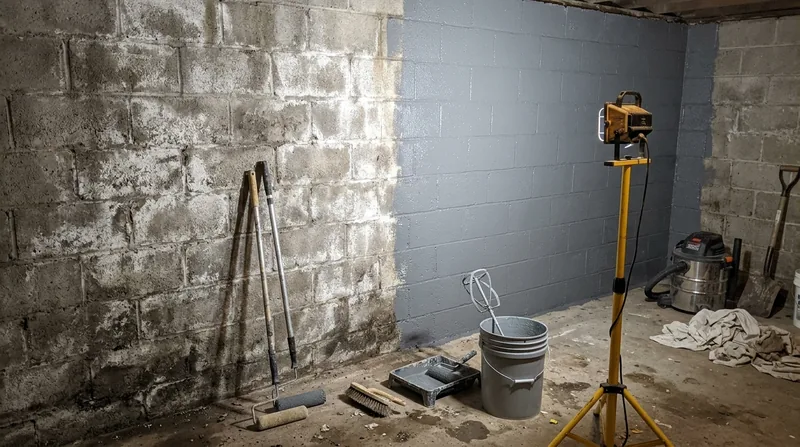


Conway sits on clay-rich Arkansas River terrace soil that swells hard after a spring storm and cracks open in the August heat, and that ground movement pushes water against the lower brick and block of older homes near downtown and the college. If you have damp lower-level walls, white powder on the masonry, or a musty smell after heavy rain, Basement Wall Sealing in Conway is the first step we look at before anything heavier. Most Conway homes are slab-on-grade or on piers, so full basements are rare here, which means the sealing work we do is mostly on the few older downtown houses and the occasional walkout or sloped-lot lower level. We clean the wall, kill the efflorescence, and apply a penetrating or membrane sealer matched to the masonry. We also tell you plainly when a sealer is not enough and the real problem is hydrostatic pressure. Call (501) 273-3692 and we will walk the wall with you. Start with our basement waterproofing service page if you want the bigger picture first.
Why Damp Lower Walls Show Up in Conway's Clay and Older Brick
The dominant failure mode in Conway is not a crack in the middle of a wall. It is water pushed against the slab edge and the lower brick by clay soil that holds rain like a sponge, then shrinks away from the foundation in dry weather and leaves a gap for the next downpour. Tucker Creek and Cadron Creek drainages run fast in spring storms, and the sudden tropical-style rain bands we get in May and October send water sideways into the wall face. On the 1920s to 1950s brick and frame houses near downtown, the stone and block footings were never waterproofed, so the wall wicks moisture and the salts come out as efflorescence.
- Efflorescence appears as a white chalky bloom and tells you moisture is moving through the masonry.
- Damp patches spread along the lower block after a hard rain and dry back out between storms.
- Peeling paint and soft mortar joints show the wall is staying wet too long.
- A musty smell in the lower level points to moisture control problems, not a sealer-only fix.
- Water at the slab edge on the 1960s to 1980s brick ranches usually means grading and downspout extensions before sealing.
Sealing stops the surface wicking and the dusting, but it does not hold back a water table. We tell you which one you have before we open a bucket.
Key info: A 1950s brick house off College Avenue had efflorescence halfway up the block and a musty smell every spring. The wall was wicking, not leaking under pressure, so a penetrating sealer after efflorescence removal and repointing solved it. A walkout on a sloped lot west of town had standing water at the base of the wall, which is hydrostatic pressure and needs drainage, not a coating.
For the code and permit side of any foundation or drainage work, check the City of Conway building department before you schedule: cityofconway.org.
How We Seal a Conway Wall, Step by Step
We start by finding out why the wall is wet, because a sealer on a wall under hydrostatic pressure is money thrown away. On a block or brick wall we probe the mortar joints, check the grading and downspouts, and look at the footing drain if there is one. Only then do we prep and seal. If the inspection shows the water is coming from below the footing, we say so and steer you to drainage instead of a coating.
- We walk the wall and the exterior grade, and we note efflorescence, crack patterns, and any bowing.
- We wire-brush and wash the masonry, then treat the efflorescence so the sealer can bond.
- We patch honeycombed mortar and small voids with a parging mix before any coating goes on.
- We apply a penetrating sealer on sound masonry, or a membrane sealer where the wall face needs a film.
- We extend downspouts and correct the grade so roof water moves away from the slab edge.
- We hand you a written note on what was sealed and what still needs a drain or crack injection.
If the wall has an active crack, we handle that separately with epoxy or polyurethane injection through ports, which you can read about on our foundation crack repair page.
Key info: A 1970s brick ranch on the south side of Conway had a damp band along the lower block and a downspout dumping at the corner. We sealed the wall, added a splash block and a 6-foot extension, and the damp band stopped. Same wall, same rain, different result, because we fixed the water source first.
Sealer Approaches We Use on Conway Masonry
Not every wall takes the same product. Brick veneer over block, bare block, poured concrete, and old stone footings all behave differently, and the clay soil around Conway means we favor breathable products that let the wall dry inward. Here is how we match the approach to the wall.
| Approach | Description | Best for |
|---|---|---|
| Penetrating silane/siloxane sealer | Soaks into the masonry and blocks surface wicking without trapping moisture. | Bare block and brick that show efflorescence and damp patches. |
| Membrane sealer | Leaves a flexible film on the wall face and bridges hairline surface checks. | Poured concrete walls with fine surface cracking. |
| Parging plus sealer | Replaces deteriorated mortar and voids before the sealer goes on. | Older downtown stone and block footings with soft joints. |
| Sealer plus grade correction | Seals the wall and moves roof and surface water away from the slab edge. | 1960s to 1980s ranches where water pools at the corner. |
When the wall is wet because of pressure from below, no sealer in this table will hold, and we will point you to an interior perimeter drain or an exterior membrane instead.
Basement Wall Sealing Cost in Conway: What to Expect
Most wall sealing jobs in Conway start around $1,500, and that figure covers a typical lower wall with surface prep, efflorescence treatment, and a sealer coat. The price moves with wall length, how much parging the mortar needs, and whether we have to correct grading or downspouts at the same time. A small damp patch on one wall is at the low end. A full walkout wall with heavy efflorescence and soft joints is at the high end. We do not quote a firm number until we have seen the wall, because guessing is how homeowners end up paying twice.
Get two or three estimates and compare what is actually included, not just the bottom line. A cheap sealer sprayed on a wet wall with no prep will fail in one season. Our full pricing overview is on the pricing page if you want the ranges before you call.
Choosing a Basement Wall Sealing Contractor Near Me in Conway
You want someone who will tell you when sealing is the wrong answer. A contractor who sells a coating for every wet wall is not diagnosing anything. Ask for proof of license and insurance, ask for references on jobs like yours, and ask what happens if the wall is still damp after the first hard rain. Permits are commonly required for structural foundation repair and for work that alters drainage or the sanitary connection of a sump discharge, and thresholds vary by jurisdiction, so confirm with the City of Conway building department. If your neighborhood has HOA rules on exterior work, check those before the crew arrives.
We are a dedicated below-grade waterproofing specialist, not a general foundation firm and not a plumber, and we will say plainly when a crack injection or an interior drain tile system is the better answer. Reach us through the contact page to set up a free basement inspection.
Basement Wall Sealing in Conway: Pricing Guide
| Service | Price | Details |
|---|---|---|
| Single wall damp patch sealing | Starting at $1,500 | Includes surface prep, efflorescence treatment, and one sealer coat on a typical lower wall. |
| Full lower wall sealing with parging | Starting at $2,400 | Adds mortar repair and parging on soft joints; price moves with wall length and void count. |
| Sealer plus grade and downspout correction | Starting at $2,900 | Includes extending downspouts and regrading the slab edge where water pools at the corner. |
| Complex or large-scale job | On estimate | Walkout walls, heavy efflorescence, or suspected hydrostatic pressure need an on-site look first. |
| Travel | Included | In Conway and surrounding areas, no separate call-out or mileage fee. |
| Estimate | Free | Response within 24h at (501) 273-3692, no obligation to book. |
Indicative pricing, the exact cost depends on square footage, finish, and site access. Free personalized estimate within 24h at (501) 273-3692.


